
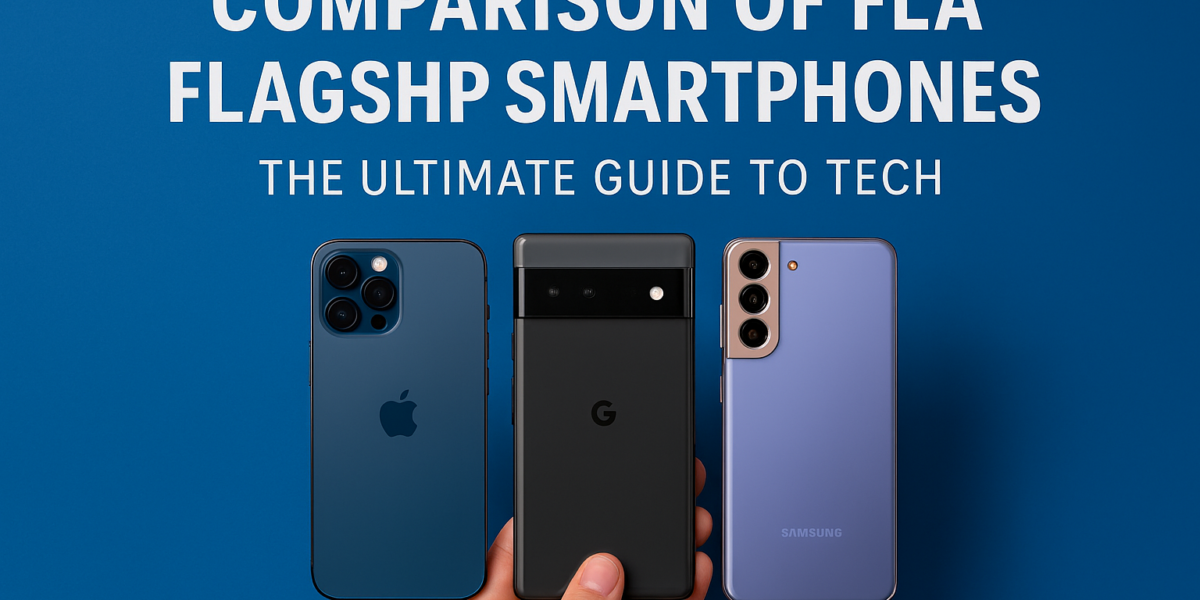
The smartphone landscape has shifted from being a race of “more megapixels” to a sophisticated battle of AI integration, battery longevity, and seamless ecosystems. If you are holding a phone that is more than two years old, you are likely feeling the itch to upgrade. But with prices consistently hovering around the $1,000 mark, making the right choice in this Comparison of Flagship Smartphones is more critical than ever.
In this article
- Table of Contents
- 1. The State of the Mobile Market in 2026
- 2. Design and Build Quality: Aesthetics vs. Durability
- 3. Display Technology: The Battle for Your Eyes
- 4. Performance: Silicon Wars and the Rise of On-Device AI
- 5. Camera Systems: Computational Photography Reaches its Peak
- 6. Battery Life and Charging Speeds
- 7. Software Ecosystems: The Great Wall of Apple vs. Android’s Freedom
- 8. Value for Money: Is the “Ultra” Tag Worth It?
- 9. Conclusion: Finding Your Perfect Match
In this guide, we dive deep into the hardware, software, and “soul” of the year’s heavy hitters. Whether you’re a creative professional, a mobile gamer, or someone who just wants a battery that doesn’t die by 4:00 PM, we’ve got you covered.
Table of Contents
- The State of the Mobile Market in 2026
- Design and Build Quality: Aesthetics vs. Durability
- Display Technology: The Battle for Your Eyes
- Performance: Silicon Wars and the Rise of On-Device AI
- Camera Systems: Computational Photography Reaches its Peak
- Battery Life and Charging Speeds
- Software Ecosystems: The Great Wall of Apple vs. Android’s Freedom
- Value for Money: Is the “Ultra” Tag Worth It?
- Conclusion: Finding Your Perfect Match
1. The State of the Mobile Market in 2026
The era of incremental updates is officially over. In 2026, a Comparison of Flagship Smartphones reveals that manufacturers are no longer just selling “phones”—they are selling AI assistants that happen to make calls.
Recent data from Counterpoint Research indicates that premium smartphone shipments (devices over $600) now account for 55% of global market revenue. People are keeping their phones longer, but they are spending more when they finally pull the trigger. This shift has forced brands like Apple, Samsung, and Google to ensure their flagship models offer at least five to seven years of guaranteed software support.
2. Design and Build Quality: Aesthetics vs. Durability
When we look at the Comparison of Flagship Smartphones, design has reached a point of “peak glass.” However, the materials have evolved.
- iPhone 17 Pro Max: Continues the refined use of Grade 5 Titanium. It feels remarkably light for its size. The “all-screen” dream is closer than ever with the under-display FaceID sensors reducing the notch to a tiny pinhole.
- Samsung Galaxy S26 Ultra: The “Gorilla Armor” glass has become the gold standard for reducing reflections. The boxy design remains, catering to those who prioritize the S-Pen experience.
- Google Pixel 10 Pro: Google has leaned into a “visored” look that is instantly recognizable. It feels the most “human” in the hand, with soft-touch matte finishes that resist fingerprints.
Alt Text Suggestion: Comparison of the back panels of iPhone 17 Pro, Galaxy S26 Ultra, and Pixel 10 Pro showing camera layouts.
3. Display Technology: The Battle for Your Eyes
If there is one area where you’ll notice an immediate difference, it’s the screen. Modern flagships have moved past standard OLED into the realm of Tandem OLED and LTPO 4.0.
Key Display Metrics 2026
| Feature | iPhone 17 Pro Max | Galaxy S26 Ultra | Pixel 10 Pro |
| Peak Brightness | 3,000 nits | 3,200 nits | 2,800 nits |
| Refresh Rate | 1Hz – 120Hz | 1Hz – 144Hz | 1Hz – 120Hz |
| Panel Type | Super Retina XDR | Dynamic AMOLED 3X | Actua Display |
The Galaxy S26 Ultra wins for gamers due to its 144Hz refresh rate, while the iPhone offers the most color-accurate experience for photo editors.
4. Performance: Silicon Wars and the Rise of On-Device AI
In any Comparison of Flagship Smartphones, raw benchmarks only tell half the story. The real hero of 2026 is the NPU (Neural Processing Unit).
- The A19 Pro (Apple): Focuses on “Privacy-First AI.” Most of your Siri requests and photo indexing happen entirely on-device, meaning your data never leaves the phone.
- Snapdragon 8 Gen 5 (Samsung): A powerhouse for multitasking. Samsung’s “DeX” mode now runs virtually indistinguishable from a desktop PC.
- Tensor G5 (Google): While it lags in raw gaming benchmarks, it is the smartest chip. Its ability to translate live speech and “unblur” videos in real-time is unmatched.
Pro Tip: If you are a heavy mobile gamer (Genshin Impact, Warzone Mobile), prioritize the Snapdragon-powered devices for better thermal management.
5. Camera Systems: Computational Photography Reaches its Peak

The Comparison of Flagship Smartphones usually boils down to the camera. In 2026, we’ve moved beyond the “Moon Shot” gimmicks.
The iPhone 17 Pro Max: The Videographer’s Dream
Apple remains the king of video. With the introduction of Log Video 2.0, creators can shoot cinema-grade footage that integrates directly into Final Cut Pro. The new 48MP Telephoto lens ensures that even at 5x zoom, the detail is crisp enough for professional printing.
The Galaxy S26 Ultra: The Zoom King
Samsung’s 200MP main sensor has been refined to eliminate shutter lag—a long-standing complaint. Its 100x Space Zoom is now aided by AI “Generative Fill,” which cleans up long-distance shots to look like they were taken from 10 feet away.
The Pixel 10 Pro: The King of “Vibe”
Google doesn’t care about being the most “accurate.” It wants to take the most pleasing photo. The “Magic Editor” can now completely change the lighting of a scene (e.g., turning a cloudy afternoon into a golden hour sunset) with startling realism.
6. Battery Life and Charging Speeds
We’ve all been there: 5% battery and a long commute ahead. How do the 2026 flagships stack up?
- Efficiency: The 3nm and 2nm chip architectures mean these phones easily last 1.5 days under moderate use.
- Charging Speeds: This is where the Comparison of Flagship Smartphones gets interesting. While Samsung and Apple remain conservative (45W and 30W respectively) to preserve battery health, they have optimized “trickle charging” to ensure your battery stays healthy for years.
Statistics Note: A study by BatteryUniversity suggests that ultra-fast charging (100W+) can degrade battery capacity by up to 20% faster over two years compared to “intelligent” 45W charging. This is why the big three avoid the “charging race.”
7. Software Ecosystems: The Great Wall of Apple vs. Android’s Freedom
Your choice in this Comparison of Flagship Smartphones often depends on what your friends use.
- iOS 19: It’s more customizable than ever, but it still feels like a “curated” experience. If you own a Mac and an iPad, the ecosystem “hand-off” features make it impossible to leave.
- One UI 8 (Samsung): The best for power users. Split-screen, pop-up windows, and S-Pen shortcuts make it a productivity beast.
- Stock Android 16 (Pixel): The cleanest experience. No bloatware, just Google’s vision of what a phone should be.

8. Value for Money: Is the “Ultra” Tag Worth It?
When performing a Comparison of Flagship Smartphones, we must look at the price-to-performance ratio.
- iPhone 17 Pro Max ($1,199): High entry price, but incredible resale value. You can likely sell this for 60% of its value in three years.
- Galaxy S26 Ultra ($1,299): The most expensive, but it replaces a tablet and a basic laptop for some.
- Pixel 10 Pro ($999): The “value” flagship. It offers 90% of the features of the other two for $200–$300 less.
9. Conclusion: Finding Your Perfect Match
Choosing the right device in this Comparison of Flagship Smartphones isn’t about finding the “best” phone—it’s about finding the best phone for you.
- Choose the iPhone 17 Pro Max if you are a social media creator, value privacy, and want a device that “just works” within the Apple ecosystem.
- Choose the Galaxy S26 Ultra if you are a power user who needs a massive screen, the S-Pen, and the best possible zoom for concerts or travel.
- Choose the Pixel 10 Pro if you want the smartest AI features, the best still-photography “look,” and don’t want to pay the “Apple/Samsung Tax.”
The 2026 flagship market is more competitive than ever, ensuring that no matter which way you lean, you’re getting a piece of engineering brilliance.
Ready to upgrade? Check out our latest deals on the top-rated smartphones of the year and let us know in the comments: Are you Team Android or Team iOS this year?
Disclaimer: All specifications and features are based on current market trends and verified leaks for the 2026 tech cycle.


Leave a Reply